
Free-Start Veo4 AI Video Workflow Guide
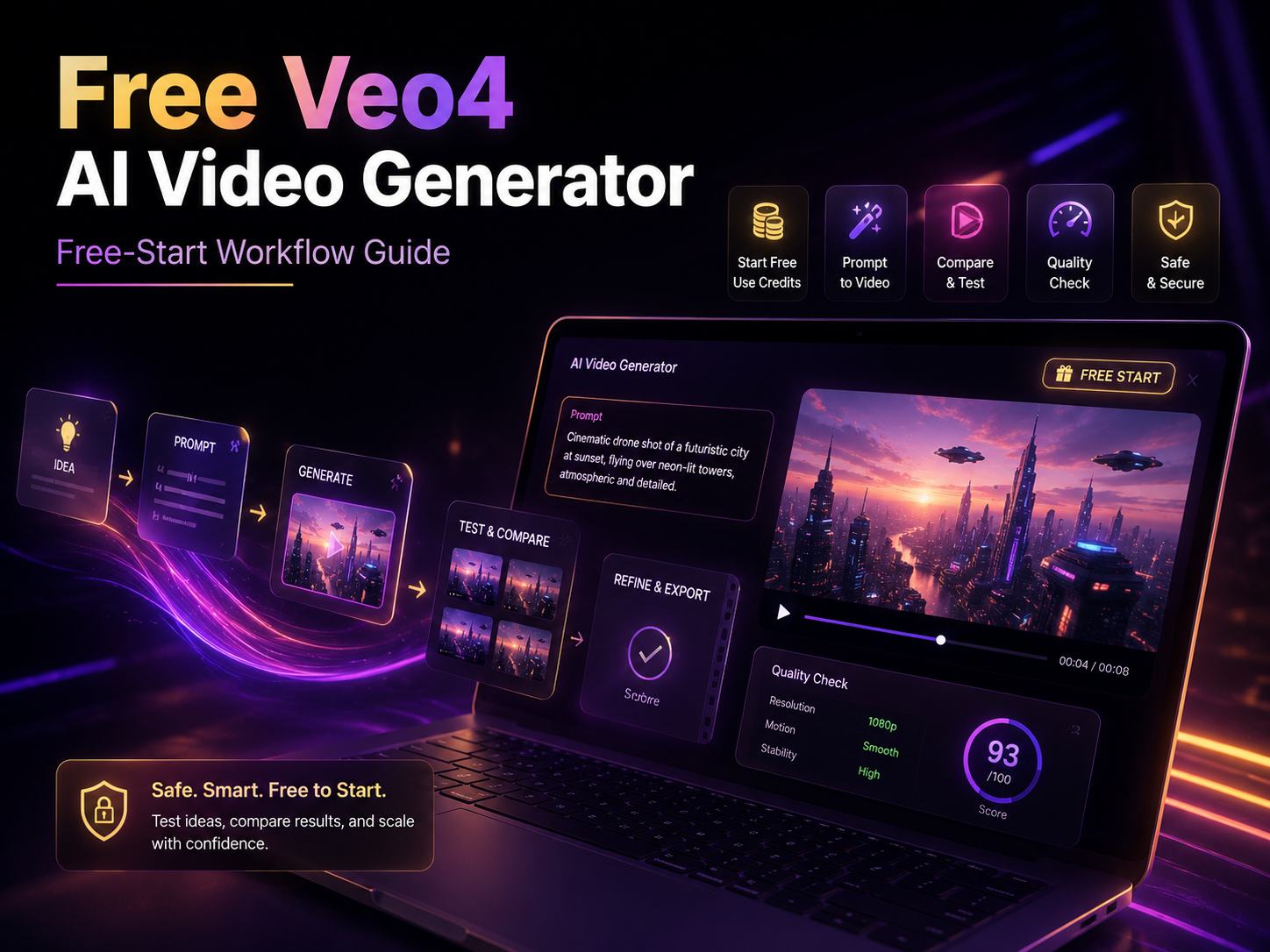
A safe AI video workflow starts with one focused test, not with a promise of unlimited output. For creators, marketing teams, ecommerce projects, small business campaigns, and social media planning, a free veo4 ai video generator search usually means one thing: how to test video quality, prompt control, model fit, and credits before scaling production.
Therefore, this guide does not discuss an official Veo4 free entry. It also does not suggest unlimited generation. Instead, it explains a free-start AI video workflow that compares available creation paths, reviews quality limits, and shows when to move from a small test into a clearer Vidnix AI workflow.
The image is clickable and opens the related Vidnix Text to Video workflow.
Free-start meaning Safe steps Input choice Credits tips Best fit More workflows FAQ
What a Free-Start Workflow Should Actually Solve
First, a free-start workflow should answer a practical question. Can one idea become a usable short AI video without wasting credits, time, or creative direction? That question matters more than chasing a model name or generating many random versions.
However, “free” should stay realistic. AI video generation uses compute, model access, duration settings, and output quality choices. Therefore, a safe start should mean a small controlled test, not unlimited video production.
In addition, Veo4-related search intent often includes comparison. Some projects want to understand model quality, prompt control, motion realism, and credit value before choosing a tool path. That is why this article uses compare, check, alternative workflow, and model selection language.
For broader context on Veo model development, Google DeepMind’s official Veo model overview is a useful reference. Still, this guide does not claim formal Vidnix support for any specific Veo version. It focuses on a safer AI video workflow.
A Safe Free-Start AI Video Workflow
Next, the workflow should reduce uncertainty step by step. A first draft does not need to become the final ad, launch video, or social post. Instead, it should prove whether the idea has enough visual strength to continue.
For example, a short product reveal may only need to test whether the product shape stays stable. A social teaser may only need to test whether the first two seconds feel clear. Likewise, a website hero clip may only need a smooth loop and low visual distraction.
- Define one output goal. Choose a teaser, product reveal, explainer draft, website loop, or short social clip.
- Select one input type. Use text for a new concept, an image for visual consistency, or an existing clip for continuation.
- Write a compact prompt. Include subject, setting, movement, camera style, and one quality guardrail.
- Run a small test first. Keep the first attempt short enough to review quickly and honestly.
- Review before another render. Score stability, motion, framing, style fit, and channel readiness.
- Scale only after proof. Move into longer clips, higher settings, or more credits when the direction is clear.
Meanwhile, this process prevents random generation. Each output has a job. One test checks the prompt. Another checks motion. A final round can prepare a stronger version for publishing or review.
As a result, credits work like a creative budget. They support decisions instead of disappearing into repeated trial and error. This is especially useful when content needs to support campaigns, landing pages, short videos, product visuals, or internal creative review.
Choose the Right Vidnix Path Before Spending More Credits
At this point, input choice becomes important. Text gives creative freedom. Images give visual consistency. Existing clips give continuity. Therefore, the strongest workflow starts from the asset that already carries the clearest signal.
For early campaign ideas, a text prompt can describe the scene, subject, camera movement, and mood. For product visuals, an image can preserve composition and reduce visual drift. For a strong opening clip, extension can help continue the same direction.


However, the safest path does not force every idea into one tool. A script idea can start with text. A product image can start with image-to-video. A usable draft can move into extension. This keeps the product recommendation natural because each Vidnix page appears where it solves a real problem.
In other words, the workflow should match the asset. That is why the first step should name the source material before choosing settings. This small decision often saves more time than rewriting prompts after several weak renders.
Credits Quality Tips for Better Free-Start Tests
Now, credits quality tips matter because AI video testing can become expensive when each render changes too many things. A good test controls variables. It changes one element, checks the result, and then decides whether another render is worth it.
First, a prompt should not chase every style at once. A useful prompt names one subject, one setting, one camera movement, and one visual style. Then it adds one guardrail, such as keeping a product label sharp or keeping the subject centered.
Second, duration should stay short in the first round. Short clips reveal motion quality quickly. Longer clips make sense after the scene proves stable. Therefore, early tests should focus on direction rather than polish.
Third, credit planning should happen before scaling. If a project needs several draft rounds, a clear look at pricing and credits helps set expectations before a larger content plan begins.
Who This Workflow Fits Best
This workflow fits projects that need a low-risk start before wider video production. For creators, it can help test short visual ideas before posting. For marketing teams, it can turn campaign concepts into early drafts before a full creative direction is chosen.
Meanwhile, ecommerce teams can use it to test product image motion, landing page visuals, seasonal ad ideas, and simple product reveals. Small business campaigns can also use it to check whether an idea works visually before spending more time on design, editing, or paid promotion.
Still, this workflow does not fit every need. If a project requires long-form production, strict brand compliance, actor continuity, or complex multi-scene direction, a free-start test should only be treated as the first proof stage. More review, credits, and editing may be needed later.
- Creators: test short visual hooks, story concepts, and social video ideas.
- Marketing teams: turn campaign lines into draft ad visuals and quick concept clips.
- Small business projects: review low-risk video ideas before committing to larger production.
- Ecommerce teams: animate product images, seasonal visuals, and promotional scenes.
- Social media teams: compare vertical clips for Reels, Shorts, TikTok, and paid social tests.
Practical Purchase and Scaling Advice
Before moving from a free-start test into paid production, the project should pass three checks. First, the draft should prove the idea. Second, the output should match the channel. Third, the credit plan should support enough revisions to reach a usable result.
For example, if a short draft already has stable motion and clear framing, scaling may be reasonable. If the draft still suffers from subject drift, weak composition, or poor pacing, another small test is usually smarter than jumping into longer output.
Therefore, the purchase decision should follow workflow evidence. Start with one safe clip. Review the result. Then decide whether the next step is more credits, a different input path, or direct support questions.
Stay in test modeUse this path when the prompt is still unclear, the scene is unstable, or the first output does not match the intended channel. |
Check creditsUse this path when several stronger drafts, longer clips, or campaign-ready versions are needed. |
Contact supportUse this path when account, access, credits, or workflow questions need direct clarification before scaling. |
Recommended Next Vidnix Workflows
After the first test, the next page should match the problem found during review. If the concept needs a scene from text, use text-to-video. If the product or visual identity needs protection, use image-to-video. If the draft already works but feels too short, use extension.
Text to VideoBest for script ideas, ad concepts, social hooks, explainer drafts, and early creative scenes. |
Image to VideoBest for product photos, campaign visuals, thumbnails, posters, and image-first content tests. |
Video ExtendBest when a short draft already has a strong opening and needs a longer continuation. |
FAQ
Is this an official Veo4 free access guide?
No. This guide does not provide an official Veo4 free entry. It explains a safer workflow for comparing AI video options, checking available tools, reviewing credits, and testing short clips before scaling.
Does a free-start workflow mean unlimited generation?
No. A free-start workflow means low-risk testing. It still needs realistic credit planning, quality review, output checks, and careful model selection before larger production begins.
Which input works best for product visuals?
A clean image usually works best for product visuals. It gives the AI system shape, color, framing, and composition. Then the motion prompt can focus on camera movement and subtle animation.
How should credits be managed during testing?
Credits should support decisions. Start with a short draft, review the result, and change only one or two variables per revision. This keeps the workflow organized and reduces random generation.
When should a clip be extended instead of recreated?
A clip should be extended when the opening already has clean framing, stable motion, and a usable visual direction. If the base clip has distortion or weak composition, recreation is usually the cleaner choice.